

Five Mindset Misconceptions (and What Research Actually Shows)
Post #2 in a "Year of Mindset" Series

Year of Mindset Series: We are thrilled to announce the release of Advances in Experimental Social Psychology’s chapter: The evolution of mindset research: Forging connections across individuals, situations, and cultures written by EA’s Dr. Mary Murphy and Dr. Kathy Emerson, along with long time colleagues and mindset experts Dr. Katie Kroeper and Dr. Dorainne Green. In this new publication, they distill how the field of mindset science and decades of research has evolved over time, and explore the future of the field for understanding how to create environments where everyone has the opportunity to learn, grow, and thrive. This research is pivotal to the work we do at EA, and we want to share different aspects of this knowledge, and how you can apply it to your work in a “Year of Mindset” series throughout 2026. More information about specific research studies can be found in the chapter.
As the idea of growth mindset has gained popularity in classrooms and workplaces, so have misunderstandings about what growth mindset really means. These misconceptions hinder efforts to create equitable learning and work environments, so let’s clear up five of the most damaging myths.
Misconception #1: Mindsets Exist Only in People’s Heads
The Reality: Mindsets are also embedded in policies, practices, and norms in groups, teams, and organizations.
When we treat mindset as purely an individual-level set of beliefs, we miss how beliefs about talent, ability, and intelligence are embedded within our environments, in our interactions with others, and within the broader culture. For example: Do your grading policies use assessment as a learning tool or a sorting mechanism? Do your hiring practices emphasize “natural talent” or potential for growth? These cultural signals matter as much as—and sometimes more than—a person’s own growth mindset beliefs in shaping their behavior.
Leaders who want to foster growth mindsets must examine what they are communicating through their organization’s values, norms, and structures.
Misconception #2: You Either Have a Growth Mindset or a Fixed Mindset
The Reality: Mindset exists on a continuum, and we all shift along it.
This false dichotomy has led to counterproductive labeling: “That student has a fixed mindset,” or “I’m a growth-minded person.” Ironically, this kind of thinking is pretty fixed-minded! Instead, mindset is better understood as existing on a continuum, with strong fixed-minded beliefs on one end and strong growth-minded beliefs on the other.
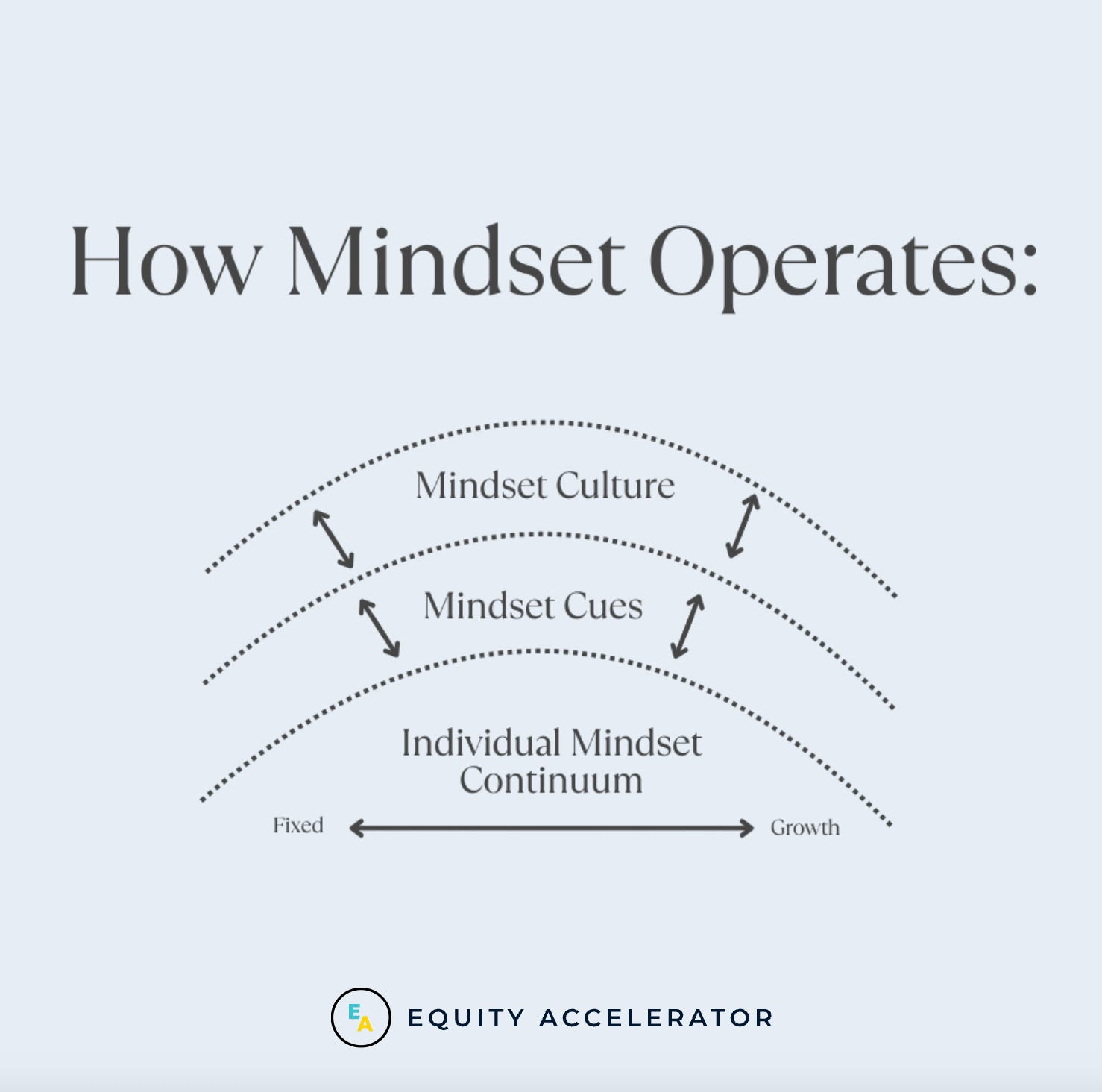
We all possess the potential to hold both fixed and growth mindset beliefs—and beliefs that may fall in between—and we move along this continuum based on situations and triggers. Recognizing that we all have mindset triggers prevents us from moralizing mindset (growth = good, fixed = bad), and helps us acknowledge when our own words and actions might be triggering fixed mindsets in others.
Misconception #3: Just Saying “Your Ability Can Grow” Will Make It So
The Reality: Belief is necessary and a starting point, but growth and change require genuine support.
A growth mindset is often confused with positive thinking. In fact, growth-minded messaging (“you can do it!”) has become ubiquitous on classroom and office walls. But when used on its own, this messaging reflects a superficial understanding of what a growth mindset is. Instead, fostering a growth mindset in students or employees means shifting an entire meaning system of beliefs, goals, and behaviors—a shift that needs environmental support to function. Telling someone “you can do anything” without providing feedback, strategies, resources, and opportunities is hollow and ineffective. People are capable of remarkable achievements, but realizing their potential requires access to the tools and support that enable growth.
Misconception #4: Growth Mindset Culture Means Just Being Nice
The Reality: Growth mindset cultures hold people to higher standards of what they can achieve and are often demanding, rigorous, and uncomfortable because they emphasize continuous improvement and mastery.
Growth mindset beliefs are inherently optimistic, because they recognize people’s potential to develop and master difficult things. But, in authentic growth mindset cultures, leaders hold people to high standards while simultaneously providing the resources and support needed to succeed. In growth-minded cultures, people are expected to openly acknowledge mistakes and reflect deeply to learn from them. Growth-minded leaders allow people to experience frustration and struggle through challenges without rushing to fix things for them, and deliver feedback that’s sometimes hard to hear—like “We’re not there yet; what are we missing?”
When leaders mistake a growth mindset for lowering standards, they hesitate to provide the constructive feedback and accountability necessary for real improvement. Simply being nice and protecting people from discomfort actually undermines genuine learning and growth.
Misconception #5: Growth Mindset = Effort, Effort, Effort
The Reality: It’s about effective effort, not just trying harder.
According to growth mindset beliefs, effort is fundamental to growth and learning—but not all effort is created equal. Leaders in growth mindset cultures value effort that moves people closer to their goals, such as using effective strategies, learning from mistakes, and seeking help when needed. Leaders foster a growth-minded culture when they provide the right mix of challenges and support, constructive feedback, strategies, and resources. It’s not about hollow encouragement to “try harder”—it’s about creating conditions where effective effort can flourish.
Getting It Right
These misconceptions about growth mindset are widespread, and have led to the misapplication of the concept in classrooms and workplaces. For example, when teachers label students as fixed- or growth-minded, they’re quicker to dismiss “fixed-minded students” and blame them for any struggles they face. Teachers who think they’re fostering a growth mindset by avoiding criticism of students may be perceived as more kind—but their students don’t experience learning from feedback. And organizational leaders that claim to espouse growth-minded values when they ask employees to “put in as much time and effort as it takes” lead employees toward burnout and stagnation rather than innovation and progress.
When we understand what a growth mindset really is—and what it isn’t—we can build environments that genuinely support everyone’s development, learning, and growth.
Next month, we’ll explore the interpersonal nature of mindset, and how individuals’ mindsets are impacted by immediate context and the mindsets of others.
Register for EA’s Creating Growth Mindset Cultures in College Classrooms online course
Ready to create classroom cultures where more students persist, participate, and thrive? EA’s new online course gives higher ed instructors the evidence-based tools to help students feel empowered and motivated, improve persistence and grades, and results in stronger instructor satisfaction.
 | A guest post by
|